Friday, March 23, 2012

Gudi Padhwa/Ugadi


Gudi Padwa, also known as Ugadi, is celebrated on the first day of the Hindu month of Chaitra, which according to the Gregorian calendar would fall sometime at the end of March and the beginning of April. This festival is supposed to mark the beginning of 'Vasant' or spring. According to the 'Brahma Purana', this is the day on which Brahma created the world after the deluge and time began to tick from this day forth.

India was, and still is to a certain extent, a predominantly agrarian society. Thus, celebrations and festivals were often linked to the turn of the season and to the sowing and reaping of crops. There is a theory that the word 'padwa' might have its roots in the Sanskrit word for crop, which is 'Pradurbhu.' The word 'padwa' as used contemporarily means 'New Year', but this day also marks the end of one harvest and the beginning of a new one, which for an agricultural community would signify the beginning of a New Year. In the case of Gudi Padwa, it is celebrated at the end of the Rabi season. The term 'padava' or 'padavo' is also associated with Dipawali, another New Year celebration that comes at the end of the harvesting season, thus substantiating the agricultural link to the festival.

The festivities

On the festive day, courtyards in village houses will be swept clean and plastered with fresh cowdung. Even in the city, people take the time out to do some spring cleaning. Women and children work on intricate rangoli designs on their doorsteps, the vibrant colours mirroring the burst of colour associated with spring. Everyone dresses up in new clothes and it is a time for family gatherings. Specialities like soonth panak and chana usal are eaten on this day.

Traditionally, families are supposed to begin the festivities by eating the bittersweet leaves of the neem tree. Sometimes, a paste of neem leaves is prepared and mixed with ajwain, gul, tamarind and jaggery. All the members of the family consume this paste, which is believed to purify the blood and strengthen the body's immune system against diseases.

The 'gudi'

While the 'padwa' part has been explained, you're probably wondering what a 'gudi' is. A 'gudi' is a pole on top of which an upturned brass or silver pot called a kalash is placed. The gudi is covered with a colourful silk cloth and decorated with coconuts, marigolds and mango leaves that symbolize nature's bounty. On Gudi Padwa, you will find gudis hanging out of windows or otherwise prominently displayed in traditional Maharashtrian households.

Ugadi is the New Year's Day for the people of Andhra Pradesh/Karnataka . Those who live north of the Vindhya hills observe it as "Barhaspatyamana". People living to the south of the Vindhya hills observe it as "Sauramana" or "Chandramana".


Ugadi

Chaitri navratri- celebrations , story and rituals

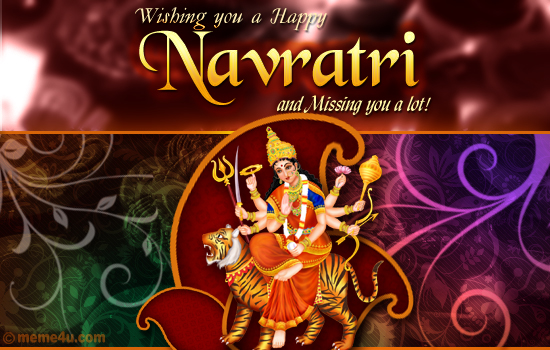
Chaitra Navratri, also popular as Chait Navratras, is the nine-day festival observed in the month of Chaitra. Chaitra Navratras starts on the first day in Chaitra month and ends on Ram Navmi, the ninth day of the month. As per the legends mentioned in the Puranas and other Hindu scriptures, Chaitra Navratri is the actual Navratri during which Goddess Durga was worshipped. But during the time of Ramayan war, Lord Ram worshipped Durga at the time of Ashwin month. Since then, Ashwin Navratri has become the main festive season to worship goddess Durga.

Importance Of Chaitra Navratri

Chaitra Navratri is one of the most important festival of Hindus. Devotees worship Maa Shakti, Goddess of cosmic power, during this time and wish to be bestowed by divine benediction from Goddess. Fasting and praying mark the Navratri celebrations. Goddess Shakti manifests herself in three different dimensions as Goddess Laxmi, Saraswati and Durga. Navratri is divided into sets of three days to adore three different aspects of the supreme goddess or goddesses.

On the first three days Durga or Goddess of Energy is worshipped.The next three days are devoted to Lakshmi or Goddess of Wealth and the last three days for Saraswati or Goddess of Knowledge. On the eighth and ninth day, Yagna (sacrifice offered to the fire) is performed to honor Durga Mata and bid her farewell. On these days Kanya Puja is performed. Nine young girls (those who have not reached at the puberty stage) representing the nine forms of Goddess Durga are worshiped. In some regions a young boy also accompanies them who symbolizes Bhairav, who is considered as protector against all evils. Those who worship Goddess without any expectation or desire being fulfilled receive her blessings as ultimate freedom from all bondages.

Navratri and Tantra

The period of Navratri is considered to be very significant and fruitful from view point of Tantric practices. It is said that one achieves greater Tantric powers during these period of Navratras. The cosmic motherly power blesses the worshipers who fathom mysterious ways of Tantra and practice it correctly. Those who worship Goddess in or around Shakti Peetha (Special Shakti Temples) harvest great rewards even faster.

Navratri, besides being a period of introspection and purification, is also considered an auspicious time for starting new ventures.


First Day - The first day is dedicated to the Goddess Durga is called Shailputri, the daughter of the Himalayas. She is a form of Shakti, the companion of Lord Shiva.

Second Day - The second day is dedicated to the Goddess Durga is known as 'Brahmacharini'. The name is derivative of the word 'Brahma', which means 'Tapa' or penace. She is also a form of Mata Shakti.

Third Day - The third day is dedicated to the goddess Chandraghanta, the symbolic representation of beauty and bravery.

Fourth Day - The fourth day is dedicated to the goddess Kushmandas, the creator of the entire Universe.

Fifth Day - The fifth day is dedicated to the Goddess Skand Mata, the mother of the chief warrior of the Gods army the Skanda.

Sixth Day - The sixth day is dedicated to the goddess Katyayani with three eyes and four hands.

Seventh Day - The seventh day is dedicated to the Goddess 'Kalratri', meant to make the devotees fearless.

Eighth Day - The eight day is dedicated to the Mata Rani or 'Maha Gauri', represents calmness and exhibits wisdom.

Ninth Day - The ninth day is dedicated to Durga also referred as Siddhidatri. It is believed that she has all the eight siddhis and is worshipped by all the Rishis and Yogis.

Sindhi New year Cheti Cand on 24/3/12 (The beautiful story of jhulelal)


Sindhi New Year Cheti Chand tomorrow. Wish all Sindh Friends the best.This day is the birthday of their Ishtadeva Uderolal Jhulelal.

In Sindh, Mohamed Bin Qasim defeated Raja Dahar, the last of the Hindu Kings, treacherously. Sindh was annexed by Khalifa of Al Hilaj to his kingdom and was administered by his representatives. They spread Islam rather with the power of sword than the conviction of its being a better belief.

Later, in 10th century Sindh came under the rule of Sumras, who were converts from Hinduism to Islam. They were neither religious bigots nor fanatics. While they made Sindh free from the foreign rule, they were also tolerant to all other religions. But there was one exception in the Sumra's reign. The province of THATTA being far away from capitol, maintained its separate identity and influence.

This province of Thatta, in the second half of the 10th. century, was usurped by one Makrabkhan, who was personification aggrandizement and greed. He killed the then ruling Shah Sahadat Khan and himself became the ruler of Thatta under the name of Mirkhshah.

Mirkhshah was not only a tyrant but also a fanatic. He was surrounded by the flattering courtiers, who in order to be in his good books and also to earn material gains always remained in his company. These courtiers one day advised Mirkhshah: " Spread Islam and you will be granted 'Jannat' after death and you will enjoy eternal bliss." Mirkhshah was swayed away by the promise of blissful life after death. Ultimately, under the increasing pressure of the Maulvis, one day, he called Panch- the representatives of Hindus, and told them bluntly: "Either embrace Islam or be prepared to die." for Hindus it was bolt from the blue. Though they were panicky, the Panchs pleaded for grace time to think over the ' Shahi Farmaan', the majestic order.

Now, it is well known that when all the doors are closed upon man, he then thinks of God. Something of that sort happened in this case also. The Mukhi (The Sarpanch) all of sudden thought of the promise of Lord Krishna in Bhagwad Geeta, "Whenever the sins increase beyond the limit and the religion seems to be endangered, I come in the form of an Avatar ( I incarnate) and mitigate the distress of my worshippers. " Who else could the Hindus think of at that tie but their Varun God- Water God?

They prayed and fasted for 40 days.At the end of the 40th. day, they heard a voice from the heaven " Don't despair. Have patience. I am coming. I will save you from autocrat Mirkhshah. Eight months from now I shall take birth at Nassarpur in the house of Ratanchand Lohano from the womb of Mata Devki, like the Lord Krishna did." Hindus rejoiced and celebrated the occasion. After 40 days of Chaaliho, the followers of Jhulelal celebrate the occasion with festivity as 'Thanks Giving Day' even till today.

Immediately after that revealance the Hindus went to Mirkhshah and prayed for an extension after narrating to the tyrant the promise they had received from God. The courtiers tried to dissuade Mirkhshah from falling into, what they thought to be a 'trap' of Hindus. But curiosity seemed to get better hold of the tyrant ruler who somehow could not reconcile to the idea : God coming down to earth! How would that happen? He preferred to wait and watch After all, lives of the helpless Hindus were at his mercy; he could put an end to them whenever he liked. So he decided to wait and granted them the extension with pseudo-gracefulness. The Hindus awaited the arrival of their savior with fervor and fondness.

After 3 months, the second tithi of Assu month, Hindus got the confirmation of the news of conceiving by Devki. They all rejoiced merrily to celebrate the event. Even till today, the Assu Chand Hindus celebrate the day with gaiety and gay. They organize cultural programs with mirth and merriment. Three months late on the Pohi Chand, Hindus again prayed to Daryah Shah (the Lord of Waters) reminding Him of His promise. And Lo!! Right on the dot on Cheti Chand, two tithis from new moon of CHET. Devki gave birth to a handsome bony boy. As if to proclaim the auspicious event , unseasonal clouds collected on the sky and brought down the torrential rains, to welcome the new Avatar. The new born infant also hailed is birth with a miracle. He opened his mouth and his parents saw therein Sindhu flowing and also an old man on PALLO fish. Pallo fish is very tasty species of fish and its peculiarity is that it swims against the current. Devki went to the banks of Sindhu and performed 'Jado' which means praying to Water-God. All Hindus celebrated the birth of the child with songs and dances.

An astrologer-an ascetic person who looked into the horoscope of the new born child, proclaimed that this was not an ordinary child. He predicted that the child will be a great warrior and his popularity will outlive him. He named the child Udaichand: A Punjabi astrologer in Nassarpur called the child Uderolal; Udero in Sanskrit means one who is near water or who has sprung from waters. Inhabitants of Nassarpur called the newborn Amarlal, an immortal child. A miracle took place from the very day of the birth of the child. The cradle wherein Uderolal rested, always kept on swinging on its own. It is because of this that Uderolal is also called ' Jhulelal'- the swinging child. And the cradle swung to and fro like the waves of Sindhu! The name Jhulelal was most befitting and has accordingly become most popularly recognized. 'Jhulan' came to be accepted as the pet name of child. Everyone knows that the Palla fish too by its very nature, swings like a cradle.

Devki, the Jhulelal's mother did not live for long thereafter. After her death Ratanchand remarried. Jhulelal sucked step mother's milk . This can be compared with Sri Ramchandra's sucking from his step mother Kekai's instead of his real mother Kaushaliya and Lord Krishna doing similarly of Mata Yashoda.

In the meantime, Mirkhshah also got the news of the birth of the mysterious child. He called the Panchs and asked them how long he was supposed to wait for their reply to his demand: "Either accept Islam or die". Hindu now being quite convinced and confident of their savior having really taken birth, implored, "A few months more our Lord! Savior of Hindus has already taken birth. He is the Water God...".

Mirkhshah scoffed at the very idea: A child saving Hindus! He said sarcastically. "All right! Neither I am dying, nor you people are leaving this land: I shall wait . When your savior embraces Islam, I am sure you will follow suit."

The Maulvis pressed upon Mirkhshah hard for settling issue without any further delay. But the very idea of a child becoming more than a match for him could not be digested by Mirkhshah. He told the Maulvis, "Wait and watch. We shall surely win. Why make haste unnecessarily?". It is said, not without reason, that curiosity killed the cat. After disposing of Hindus, Mirkhshah became very anxious to have a firsthand knowledge about the mysterious child. He decided to deputy one of his ministers name Ahirio to Nassarpur to see and gauge things for himself.

Ahirio decided to make use of deceit. He took a rose dipped in deadly poison and asked Ratanchand to take him to the new born baby. Ahirio was astonished at the very first glimpse of the child. He had never seen such a dazzling and charming baby. He hesitated for a while, but soon mustering up his courage, he extended the flower to the baby's lips. Uderolal gave a meaningful smile and blew the flower in one breath. The flower flew out of Ahirio's hand and fell far away on the ground. Then Ahirio saw that the child was no more in the cradle. Instead, an old man with white long beard was staring at him! All of a sudden the old man turned into a lad of sixteen years! Again the scene changed; he saw Uderolal on a horseback with a blazing naked sword in his hand and there were rows of warriors behind him. It was a scene of battle field. A cold shiver passed through the body of Ahirio, who bowed his head in reverence and entreated, " Have mercy Sindhu Lord. I am convinced, Hindus are safe...".

On his return to Nassarpur Ahirio narrated all the miraculous occurrences to Mirkhshah. Mirkhshah said, "It seems you have been under the spell of magic. How can a child turn into a young boy and an old man and then a warrior on the horse back, simultaneously? Impossible! Next to impossible!!.

But in the heart of his heart, Mirkhshah was scared.That very night in his sleep, he dreamt a dreadful scene.... A child was sitting on his thorax; then it changed into an oldman with white beard, sailing in the sea with a book in his hand. Then the scene changed again. He was confronted by a warrior with a drawn sword; on the battle field and saw himself losing ground....."

Next morning he called for Ahirio and asked him to think of any counter action in the matter. Ahirio advised him to lie low for the time being and wait and watch.

Uderolal as a child, performed many miracles for Ratanchand and the inhabitants of Nassarpur. They were all fully convinced that God Himself had descended on the earth to fulfil his promise made in Bhagwad Geeta. Nevertheless, Ratanchand performed all the routine ceremonies as a parent. He had the tonsure of the child's head called 'Mundan'; then he took the child to a Vedic scholar and requested him to take the child under his protege. The FDIC scholar smiled meaningfully and started imparting knowledge- worldly as well as spiritual to the child.

When the question of giving of 'Guru-Mantra' to Uderolal came up. Ratanchand took the child to Gorakhnath, who said, "Yes, for the namesake I shall give him the 'Gur-Mantra', otherwise I know well, he needs none; on the contrary he has to teach us all so many things worth learning". Uderolal received the 'Guru-Mantra' of ' Alakh Niranjan' from Gorakhnath.

Udero's step mother wanted him to earn some money for the family. She gave him a container full of boiled beans to sell in the market. Udero instead of going to market, went to the banks of Sindhu. Half of the contents he distributed free among the beggars, poor and pious ones who lived on the river bank. The other half, he made an offering of it to Sindhu. During the afternoon he talked to the children and elderly persons about the spiritual wealth on the river bank. In the evening the same container emerged from the waters, and came swimming to him. The container was full with fine quality of rice.

When the step mother started getting the fine quality of rice every day, she got suspicious. One day she sent Ratanchand after Udero. Ratanchand followed Udero discreetly all the day and witnessed the miracle. He bowed to Udero from a distance and accepted either as the God Himself or his Messenger.

On the other hand, Mirkhshah was once again being pressurized by the Maulvis. They told him not to waste any more time and that he should either convert the Hindus to Islam and vouch-safe for his own blissful life in' Jannat' or be ready to be declared as an associate of 'kaffirs' the infidels.

Since Mirkhshah did not like to be branded as an infidel, he had no other alternative but to meet Uderolal either face to face privately, or on the battlefield. He asked Ahirio to arrange for a private meeting with Uderolal. Ahirio, who had in the meantime, become a devotee of Daryashah (Uderolal), went to the bank of Indus and prayed to Water-God to come to his rescue and save him from the onslaught of the king and religious fanatic. To Ahirio's astonishment, he saw an oldman with white beard in saintly clothes, sailing on a Palla (fish) ,going against the tide, north way. Ahirio's head bowed in adoration and admiration and he understood once and for all that Uderolal the Water-God, was holy man for Muslims also. He proclaimed at the top of his voice that Khwaja Khizr swam the Sindhu against tide and rested on an island near Rohri!

Part: 3
Jhulelal- Part 3

Then Ahirio saw Udero springing from Sindhu on a horse back, with a flag in one hand and sword in the other, followed by endless troops of warriors. Ahirio bowed once again to Uderolal and pleaded, "This is a private meeting, why to bring with you so many warriors?" Uderolal made the troops vanish into thin air. When Uderolal came face to face with Mirkhshah, he said,"Whatever you see around yourself is the creation of one and only God, whom you call 'Allah' and Hindus call 'Ishwar'. Hindus Muslims and other human beings are all His creation".

Maulvis urged upon Mirkhshah not to listen to infidel's talk of Udero, but to arrest him and to put him in jail till he agreed to embrace Islam. They pleaded, "Sir, do not miss the golden opportunity. Arrest Udero while he is alone.". Mirkhshah wavering as usual, was ultimately carried away by the pressurization of Maulvies and ordered the arrest of Uderolal. As the officials of the court moved towards Udero, water started flowing in the court. all the courtiers including Mirkhshah found themselves inundated in water. Simultaneously, the fire also broke out;t and the Palace became towering inferno. There was no way to escape the wrath of the deity. Udero spoke again: "Mirkhshah, think it over again. Your God and mine are not two different ones. Had Almighty so desired, He could have ordained Hindus to be born Muslims. But no; God wanted unity in diversity. All world is His manifestation.

Mirkhshah beseeched tearfully, "My Lord! I realize the truth now. Save me and my courtiers from this ravage." Immediately the fire was blown out on its own and the water receded.

Having been pacified , Uderolal pronounced "Fire is the first principle of Universe and Water is the first principle of life. Worship of God is to be done in its blended form of Jyoti (light) and Jal (water); and let every human being worship the Almighty with whatever the name he desires. Let there be a bond of brotherhood among all Sindhis-Hindus as well as Muslims".

Mirkhshah bowed respectfully and agreed to treat Muslims and Hindus alike. Thereafter the persecution of Hindus was stopped forthwith and they were allowed to retain their identity.

Uderolal then told Hindus to go home and attend to their routine work. Before they dispersed Uderolal told them to think of him as an embodiment of light and water and establish a temple to perpetuate the memory of the unusual transformation of Mirkhshah. "Day and night", he said "Light one candle inn a temple and water should be available for 'Daat' (holy sip).

Uderolal had two older brothers, Sonaram and Bhedoram. They were neither impressed by Uderolal's victory over Mirkhshah nor were they enamoured of his miracles. They kept away from him. Uderolal tried his best to make them give up their worldly materialist ways and to adopt spiritual path; but they bluntly and impudently refused to be his followers. Then, Uderolal turned to his cousin Pagad and named him the first Thakur- priest of the religious sect which believed in Water-God.

Pagad followed Uderolal wherever he went. They visited Rohiri by the river side and a 'ghaat' was built there, which later on came to be known as 'Udero-ghaat' . It was near Zindah-Pir, the place where Uderolal, as Khwaja-Khizr swam against the flow of the river. While he was with Pagad, Uderolal performed many a miracles, which convinced Pagad beyond any shadow of doubt that Uderolal was really the River or Water-God.

Uderolal accompanied by Pagad, went to Thatta again. Mirkhshah was delighted and elated. He welcomed him with awe and adoration. Uderolal's temple, by then, had become quite famous since both the Hindus and Muslims prayed there regularly and reverently. From Thatta, Uderolal and Pagad went to Hinglaj, from where Uderolal visited Manoharo island, off the shore of Kalachi (later known as Karachi). ' Lal Saain Mandir' was built at Manoharo too. Ultimately Uderolal and Pagad returned to Nassarpur.

Uderolal gave seven symbolic things to Pagad. These seven form the essential elements of Daryahi sect- believers of Water-God. These seven are:
1) Verho: Ring, which acts like an Allauddin's lamp; by touching it, one gets what he wishes.
2) Light: Always lighted earthen candle which reminds of the Almighty and His mercies.
3) Khantha: 'Pakhar' A cloth cover which acts like a shield against attacks of enemy.
4) Deg: A huge metallic vessel in which rice is cooked during a marriage or any festival. It is blessed with the boon that irrespective of the number of people to be fed, can be fed and it never gets empty.
5) Tegh: A Sword, Vishnu Devta gave to Bhawani to kill demons or sinners. It is a symbol of Vishnu.
6) Dhokla: Damru, Lord Shiv's symbol.
7) Jhari: A Kalsh, symbol of Brahma.

Thus Daryahi Panth created by Uderolal has blessings of the original Trimurti of Gods in Hindu Mythology. Brahama, Vishnu and Mahesh.

Part: 4
Jhulelal- Part 4

Sant Pagad built a temple called 'Lal Sai Mandir' at Nassarpur and kept the essential seven symbols given by Uderolal there. More and more people, both Hindu and Muslims visited the Mandir everyday. Uderolal also asked Pagad that after the songs (Panjra) are sung in praise of the River-God (Water-God) every evening, 'Palav' ceremony must be performed; it means holding the lower part of shirt, towel, or any other piece of cloth stretched out to beg from the Lord the good and welfare of all; one should also pray for the wellbeing of others before one asked anything for oneself.


After giving all the symbols and teaching fundamental essential rituals of Daryahi Panth to Pagad, Uderolal again went on a tour of Sindh and far beyond to propagate his teachings. How a prayer to Jal (water) and Jyoti(light) can lead his devotees to their worldly and spiritual welfare and bring about the ultimate salvation of their souls. In this regard Uderolal wanted to bind the people of the land, both Hindus and Muslims, into a bond of unity and spiritual harmony. He wanted to impress upon his followers the truth that all paths ultimately lead to one destination i.e oneness of the God and oneness of the devotees. He expected a concrete contribution from Muslims and sought their active co-operation building the Mandir and spreading his teachings. By this time Uderolal was twelve years old.

He took Kodan a teenager son of the second Thakur after Pagad Getturam and went to Hala, ten miles from Nassarpur. There he saw a well nearby a barren land. He asked the Muslim old man, who claimed the ownership of the well, whether he would sell the well and adjoining land. Mamman, the old man, looked at the youngster and sarcastically said,"show me the money first and then I shall reply". Uderolal drew two lines on the ground and started digging in-between. To the surprise of the old man, gold and jewelry started emerging out of the earth. Uderolal told the old man," Take away as much as you can but give us the well and the land..". Mamman was overwhelmingly influenced by the miracle. He reverently bowed to the Uderolal and said " So you are the godly being who has come on this earth to teach love and brotherhood. I shall give you not only the well and the land but also be your devotee. But first let me bring my wife. Why should she also be not benefited by your presence?"

Both the old man and his woman not only gave the well and the land but assisted Uderolal in constructing the Mandir known later as 'Uderolal-jo-Mandir'. Mamman couple became its first Mujawars-caretakers. Muslims continued to be its caretakers thereafter.

This 'Uderolal-jo-mandir' became the nucleus of pilgrimage for both the Hindus and Muslims. When railways came to Sindh, there was no such station as Uderolal. People used to alight at Tando Adam. But the successive and ceaseless efforts of the pilgrims and miraculous occurrences, compelled the Government to build a railway station near the village that had sprung around the Mandir.

After returning to Nassarpur, Uderolal realized that the purpose for which he had come to the earth was over. At that time Uderolal was just thirteen years old. Oneday he called Pagad to his side and told him to carry on with the mission of building temples and spreading his message. " Your descendants will be known as Thakurs, the privileged priests and my followers will be known as Shewaks. For every temple, there will be a 'Babo' who will conduct the day to day prayers and perform religious ceremonies regularly.

Pagad and others were sad to know all this since the idea of being separated from Uderolal, their leading light, was too much to bear; but they had no choice except to abide by the will of the Master. Uderolal selected a place nearby a village Jhijhan to give up his earthly being.

Hindus and Muslims from far and near came to witness this unusual scene. Mirkhshah's representatives were also present there. As soon as Uderolal's soul left his body, they took over its charge and said, " Under the instructions of Mirkhshah we will build up a "Turbat" and Quba" (a tomb) according to the dictates of Islam". The Hindus resented this stand. They said, "We shall build a Samadhi according to the Hindu customs". While the debate was going on, heavy rain started pouring in. There came a voice from heavens; " Behold, make my shrine acceptable to both, Hindus and Muslims; let its one part be like a temple and the other part be like a Dargah (shrine). I belong to all of you".

Thus ends the story of Uderolal, based on some historical events, folklore; it is an unusual mixture of facts and fiction.


Is the Story of Uderolal based on history? May be or may not be. It is for historians to adjudge. Dada Panjwani said," For me it is sufficient that faith counts more than facts, Faith has established Jhulelal as Asht Dev of Sindhis- Community God of Sindhis". He says, " For us it suffices that Uderolal is Lord of the Water and Light. He inspires us to believe in unity and brotherhood of mankind. He raises us above the differences and distinctions of caste, colour and creed".

A God was incarnated with ever increasing followers. Ultimately Jhulelal became the Community Deity of Sindhis, a Community symbol. "Though Sindh is not on the map of Independent India" said Dada Panjwani, "Sindh is wherever Sindhis live. Uderolal continues to be a bond of unity between Sindhis allover and every where".


Saturday, November 5, 2011

Remembering Vasudev Balwant Phadke

Vasudeo Balwant Phadke

Vasudev Balwant Phadke (Marathi: वासुदेव बळवंत फडके) is widely regarded as the 'father of the armed struggle' of Bharat's independence. He preached that 'Swaraj' was the only remedy for their ills. He can, with justice, be called the father of militant nationalism and Hindutva in Bharat. What the Bharatiya Sepoys tried to do in 1857, followed by the Marathas in three bitter wars and then the Sikhs in 1840, but failed, one man attempted - to take on the mighty British Empire single handed. In true Hindu spirit he took a vow to stir armed rebellion and destroy the British power in Bharat and re-establish the Hindu Raj.

Vasudev was born on 04-11-1845 in Shirdhon village of Panvel taluka based in Raigad district in Maharashtra state in a Marathi Chitpavan Brahmin family. As a child Vasudev preferred learning skills such as wrestling and horse riding over high school education and dropped out of school. Eventually he moved to Pune and took up a job as a clerk with the military accounts department in Pune for 15 years.

Vasudev came into the limelight when he got complete control over the city of Pune for a few days by catching the British soldiers off guard during one of his surprise attacks.

Phadke was moved by the plight of the farmer community during the British Raj. Phadke believed that 'Swaraj' was the only remedy for their ills. With the help of the Ramoshis, Kolis, Bhils and Dhangars communities in Maharastra, Vasudev formed a revolutionary group called ‘Ramoshi’. The group started an armed struggle to overthrow the British Raj. The group launched raids on rich English businessmen to obtain funds for their liberation struggle.

The British Government offered a bounty for his capture. Not to be outdone, Phadke in turn offered a bounty for the capture of the Governor of Bombay, announced a reward for the killing of each European, and issued other threats to the Government. He wrote in his diary, "I wished to ruin the British. From morning to night, whether bathing, eating or sleeping, I was brooding about this and hardly slept in doing so. I learnt to fire at targets, ride a horse, wield a sword and exercise at the gym. I had a great love for arms and always kept two guns and swords".

Phadke began to cut the communications of the British and raid their treasury. His fame began to spread. For some time he kept up a heroic unequal struggle with the British and their Pathan underlings under Abdul Haque. Eventually after a fierce fight he was captured in Hyderabad on 21st July 1879. He was charged with waging war against the British Government. Realising that he was far too dangerous an individual to be allowed to remain in Bharat, he was transported for life to a prison in Aden. He was fettered and placed in solitary confinement. Nevertheless on 13th October 1880, undaunted, he escaped. Unfortunately, he was shortly captured again. To protest against the atrocities that he was subjected to, he went on a hunger strike; he died on 17th February 1883.

Saturday, October 22, 2011

Agnisar Pranayama: Source of Internal Energy


Agnisar pranayama increases the internal energy and gives vitality. Those who are suffering with constipation, indigestion and loss of appetite will get good benefits with its regular practice. People with excessive fat on the stomach should practice it regularly to reduce the fat. This pranayama overcomes laziness, disinterest and strengthens the internal organs, muscles, nerves and blood veins. People suffering with lung problems can gain a lot. This pranayama cures asthma, tuberculosis and other serious diseases. It also cures the entire throat related problems and old kapha problems. It cures sleepiness and circulates inner energy.


First Method of Agnisar Pranayama:

Sit in Padmasana and keep the hands on the knees in a comfortable position. Close the eyes slightly and concentrate on the mind with normal breathing.

Exhale slow, deep and stable breathe. Stop the breathe outside, i.e., do Bahirmukh. Stretch both the hands straight and keep them on the knees with slight pressure. Contract and expand the stomach. Try to touch the navel deep inside the stomach.

Keep the stomach and hands normal before doing poorak i.e., inhale. Now take deep, stable and slow breathe.

This is one cycle of Agnisar pranayama. In one cycle contract and expand the stomach at least ten times. Increase the number to 30. In the beginning practice it for 5 times and then slowly increase is it up to 15 cycles. During winters you can practice it for 25 cycles. Breathe normally, rest for sometime and then do shavasana.

Second Method of Agnisar Pranayama:

Remain in Shavasana for five to ten minutes and take deep breathe as in the first stage. Stop the breathe inside and do Antarkumbhak. Do moolbandha and Jalandhar bandha at this stage.

As in the first method, stretch the hands straight and bend the head as much as you can and try to touch the chest with the chin. Do moolbandha along with this so that the moolbandha is stretched upwards. In men the moolbandha is situated between the rectum and the genitals and in case of women it is in between the uterus and vagina.

Before exhaling loosen the moolbandha and then the Jalandhar bandha. Keep the hands normal. Then deeply breath in like in the first stage.

This is one cycle. Rest for some time in Shavasana after doing five to seven cycles of this pranayama.

Cautions while practicing Agnisar Pranayama:

This pranayama should be done in the morning hours after passing bowels and getting free from the morning chores. Those who want to practice it in the evening should do after four hours of having meals.

During winters, Agnisar pranayama should be done as per the procedures. This is the best time for this pranayama. During summers after doing this pranayama ten rounds of Shitali pranayama should be definitely practiced.

During the practice period the person should eat simple, pure food. Avoid eating heavy, oily, fried and non-vegetarian food.

Smoking and alcohol should be completely avoided.

The patients of intestinal problems, hernia, high blood pressure and other diseases should not practice it.

If you have undergone stomach operation recently then this pranayama should not be practiced. It should be done under the guidance of some yoga expert after few months.

Stop the practice immediately if you experience tiredness and practice it the other day.

Practice it according to your physical capacity. Do not do kumbhak in excess of your body capacity. Make sure that during Bahirkumbhak slightest air should not get inside.

Patients suffering with ear, nose and eye problems should not practice agnisar pranayama.

Thursday, September 22, 2011

Ekadashi September 2011 dates – Monthly Fasting for Vishnu

Dedicated to God Vishnu, Ekadashi Vrat is observed on the eleventh day of a fortnight in a Hindu lunar calendar. Ekadashi dates in September 2011 – 8th and 23rd. Fasting from sunrise to next day morning sunrise is generally observed by many Hindus. Some observe the fast from the start time of Ekadasi Tithi and break the fast at the beginning of Dwadasi Tithi.

The September 8, 2011 Ekadasi is known asParivartini Ekadasi. It is also known as Jaljhulni Ekadasi.

The September 23, 2011 Ekadashi is known asIndira Ekadasi. (Majority of regions)

September 24, 2011 – Indira Ekadasi (Bhagavath) (Only in certain calendars in Maharashtra)

The preparation for Ekadashi fasting begins on the Dasami day – the day before Ekadasi. On the Ekadasi day, devotees observe complete fast. The day is meant for hearing religious discourses and performing pujas.

There are also devotees who do not observe total fast. They avoid grains especially rice and consume fruits, nuts and milk.

The fasting comes to an end on the Dwadashi day with the consuming of food cooked in one’s house.

Thursday, September 15, 2011

9 Reasons why the Communal Violence Bill is itself communal

9 Reasons why the Communal Violence Bill is itself communal

By R Jagannathan (post from www.firstpost.com )

For sheer gall, there’s nothing to beat the draft Prevention of Communal and Targeted Violence (Access to Justice and Reparations) Bill, 2011. If allowed to become law in its current form, it will not only exacerbate communalism, but also destroy the foundations of our federal structure. Here are nine reasons why the Bill must be jettisoned lock, stock and barrel and a new drafting committee comprising all major political parties set up in its place to prepare an alternative.

First, it is surprising why an unelected body like the National Advisory Council (NAC), which is home to Sonia Gandhi groupies, was allowed to draft a Bill that is so crucial to communal harmony. This is a Bill that requires a national consensus, and getting a bunch of Congress-leaning activists to masquerade as the voice of civil society is nonsense.

The NAC draft is clearly driven by just one – admittedly important – case of communal violence: Gujarat in 2002. Reuters

Second, the Bill is itself communal in nature. According to a key definition on the people who are presumably the focus of targeted violence, “group” means a religious or linguistic minority, in any state in the Union of India, or Scheduled Castes and Scheduled Tribes (SC/ST)….”. If you take away that fact that religious minorities and the SC/STs between them account for over 40% of the total population, the Bill cleverly posits that the other 60% (which may include upper castes Hindus, other backward castes and some miscellaneous groups) are the only people capable of targeted violence. Are we saying 40% can never target 60%, given that these numbers are distributed all over the country?

Take the case of Punjab and Kerala. In Punjab, the Sikhs constitute a slim majority of the population, but with an SC/ST share of close to a third (and, therefore, excluded from the definition of people who can target violence against some group), we have the situation where the majority (Hindus and SC/ST Sikhs) is supposedly being targeted by upper crust Sikhs (the majority minorities). This is hilarious.

The same in the case in Kerala, where the nominal Hindu population is around 55%. But when you take the SC/ST population out of the Hindu total, Hindus are by no stretch of imagination the majority, according to this Bill. So a minority (Hindus minus SC/STs) will be targeting other minorities.

Clearly, the Bill is not meant to tackle communalism, but to divide the people further into majorities and minorities, with only the latter being privileged enough to be considered a victim of targeted violence.

Third, the NAC draft is clearly driven by just one – admittedly important – case of communal violence: Gujarat in 2002. Any law that is drawn up on the basis of one outlier incident is likely to be draconian and foolish. The Bill is clearly targeted against the Sangh Parivar (no quarrel with that, as long they weren’t the only ones targeted) when the objective should be to prevent communal violence of any kind. But were the 1992 riots in Mumbai and the 1993 blasts the result of Hindu conspiracy? Were all the blasts that took place in India the last decade (barring the ones perpetrated by a bunch of extreme Hindu organisations in Malegaon) the result of upper caste violence against the minorities or the reverse? Let’s also not forget that the country’s worst communal riots did not happen during BJP watch (Gujarat in the late 1960s, and the 1984 anti-Sikh riots). The only case of gigantic ethnic cleansing in India happened in Kashmir, where the majority drove out the Pandits (albeit with help from across the border).

Fourth, the NAC draft Bill, if it is passed like anything in its present form, will destroy the federal character of the Indian Union. Law and order is a state subject, and so any law that seeks to take this right away and shift it to the Centre is unconstitutional. If passed, the law will stoke the fires of sub-regionalism since regional chauvinists will cite the reduction of state powers as reason to advocate secessionism. It will create Kashmirs out of every Indian state that is not ruled by the Congress.

Fifth, the Bill will seek to create a National Authority of Communal Harmony, Justice and Reparation (NachJar) with a seven-member panel that will effectively be unaccountable to anyone. It is supposed to be selected by a panel that includes the Prime Minister, the Home Minister, the Leader of the Opposition in the Lok Sabha, and nominees of all the national political parties (there are seven of them – Congress, BJP, CPI, CPM, BSP, RJD and NCP). It’s not clear if the Congress and BJP will have additional representation (from the party side) since they already have ex-officio seats as PM, Home Minister and leader of the Opposition in the Lok Sabha.

Since the selection of NachJar will be my majority vote, all the Congress needs is an understanding with three of the other members to pack the Authority with its own choices.

But once in office, it will be almost impossible to oust any member since they can be removed only by a presidential order, and that too on grounds of proven misbehavior or functional incapacity and that, too, after a detailed inquiry is held. No member can be removed for partiality or failing to do his duty. Since four of the seven members have to be women and one a member of the SC/ST, it is anybody’s guess who will dare take them on.

In short, we will have a NachJar that is essentially unelected, unaccountable, and unmovable.

Sixth, the Bill will facilitate central intervention against state governments that are from opposition parties, says columnist Swapan Dasgupta. Consider this situation. A few years ago, there were a few attacks on churches in Karnataka. The Yeddyurappa government was slow in responding to the threat initially, but soon he made amends. If an HR Bharadwaj were the arbiter in this case, it would have been goodbye Yeddyurappa. One is not holding a brief for the Karnataka Chief Minister, but surely the centre cannot act in an area where it is not empowered to. A clause in the Bill also says that the provisions will apply to all states barring Kashmir, where it needs the special permission of the state government. That’s because of Article 370. But shouldn’t elected governments be shown the same consideration in other states? The jholawalas of NAC appear to have decided that since they can’t dismiss inconvenient governments at will due to the lack of a Rajya Sabha majority, the Communal Violence Bill should come in handy. They have neatly avoided all centre-state issues by pretending that communal violence is beyond the law.

Seventh, the Bill seeks to bring in through the back door the doctrine of “command responsibility”, as this blogger in “offstumped.in” makes clear. This is the route through which the secular mafia tried to bring Narendra Modi to book, but if this idea is to be taken to its logical conclusion, we should accept that Manmohan Singh and Sonia Gandhi were responsible for the 2G and Commonwealth scams. One is the Prime Minister and the other his party boss and remote-control holder. But everyone is busy singing their praises in the face of the worst corruption scandal in Indian economic history. The doctrine of command responsibility does not sit well with the idea of decision-making errors. A wrong decision can be taken by any minister or bureaucrat several times in his career. There may even be political compulsions, and the Congress is fond of telling us. Unless we want to bring all decision-making to a halt, no one will take any risks. We will do everything by the book, and the country will go down the drain from decision paralysis – which is what is happening to the Manmohan Singh government in the wake of all the publicity given to the 2G scam.

Eighth, the Bill puts civil servants squarely in the firing line. While there is no doubt that civil servants who don’t do their duty (examples are Gujarat, the anti-Sikh riots of 1984, the 2G scam, and West Bengal’s Nandigram fiasco), there is only one measly clause saying no public servant shall be prosecuted for actions taken in good faith. But clause 13 gives the game away by listing a whole host of crimes that civil servants may be hauled up for under the head “Dereliction of duty.” They do not even have a copout saying they were following orders, for they have to judge if the orders were lawful or not – a difficult decision to make in the fog of a crisis situation.

Now, try and apply this situation in Kashmir, where stone-pelting mobs are damaging property and don’t heed the call of the police. What is the right decision that a politician or civil servant will take? If he fires and saves the property, it may be called excessive use of force. Or even communal bias. In Gujarat, keeping quiet when the mobs were burning and killing was not an answer. But in Kashmir it is fine, is it?

Ninth, here is a simple issue: majority and minority are contextual. One may be a minority in one context, and a minority in another. Hindus may be a majority in India, but a minority in Kashmir or the north-east. But even within minorities, there are further minorities. The apostate, the gay, women rights activists, and modernists are all minorities within minorities.

The bottom line is this. This is not a Bill drafted in good faith. When you have cherry-picked the categories you want to nail through the Communal Violence Bill, is it any wonder you have come up with a definition that fits the Congress’ political rivals?